THE LOG / PRACTICAL POWER / 2 MIN READ
Check the Leads
Inspect the cable before trusting the charge. A damaged connection is a reason to stop, not to add tape.
SMPLMN / Practical notes
Start disconnected
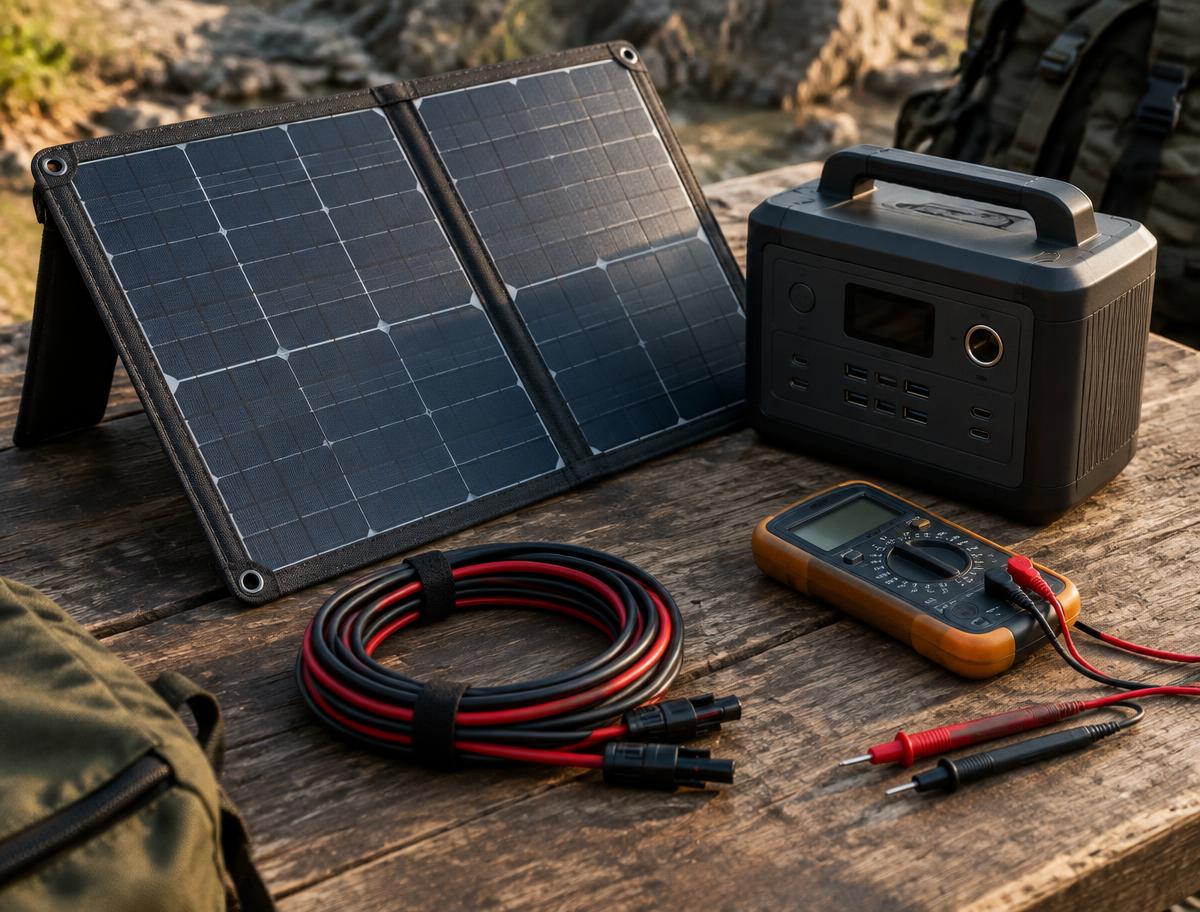
Power down and disconnect equipment according to its instructions before inspecting accessible leads. Look for crushed insulation, exposed strands, bent contacts, or melted housings. Check where the cable enters the connector; repeated flexing often starts damage there. Never open a sealed battery or handle exposed energized connections as part of an ordinary visual check.
Compatibility is more than fit
Use replacement leads specified for the equipment and its operating conditions. Polarity, conductor size, connector rating, and weather resistance all matter. An adapter that happens to fit can still be wrong. Do not bypass protective devices or repair a heat-damaged connector with tape. If a lead repeatedly gets hot, stop using the system and have the cause assessed.
Store without strain
Coil cables loosely rather than sharply folding them at the connector. Protect contacts from dirt and moisture, and avoid pulling a plug out by the wire. Inspect again before the next use. These checks help maintain a complete low-voltage portable system; they are not instructions for mains wiring or battery construction. Knowing when to replace a damaged part is a practical skill too.