THE LOG / PRACTICAL POWER / 2 MIN READ
Count the Watts First
A light, a phone, a small battery. Understand the numbers before choosing a portable power setup.
SMPLMN / Practical notes
Read the rating
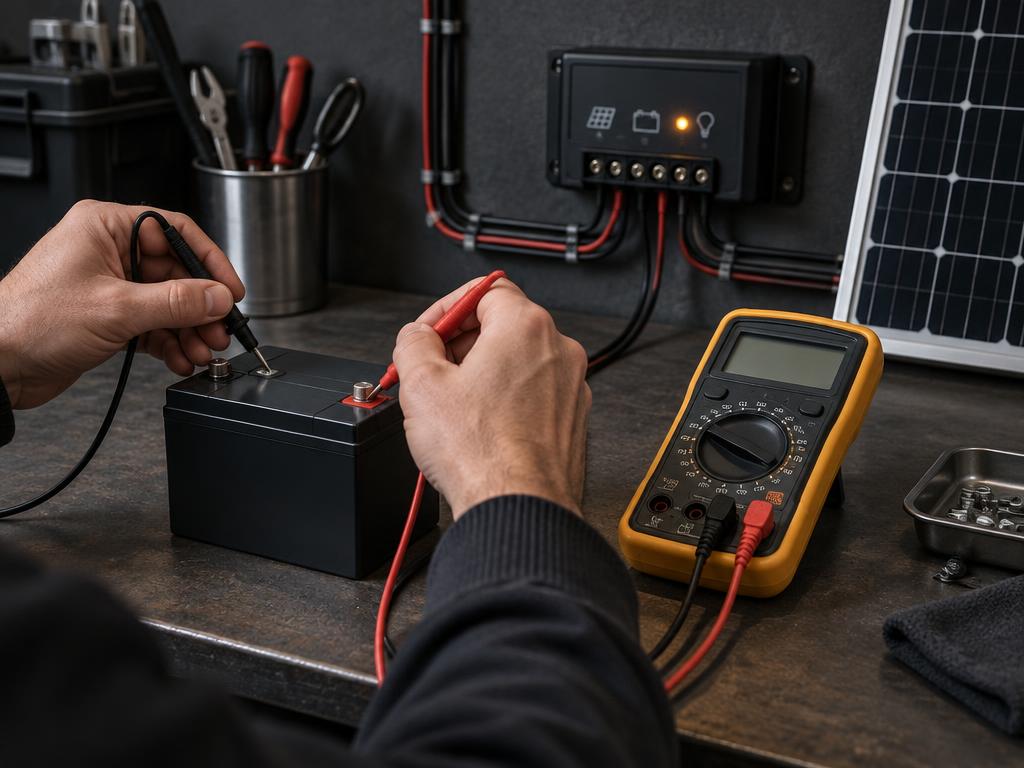
Volts describe electrical potential, amps describe current, and watts describe power. For a simple DC example, 12 volts multiplied by 2 amps equals 24 watts. Read the device label and manufacturer specifications rather than guessing from its size. Startup demand and operating demand can differ. A single calculation is useful for planning, but it is not enough to design safe wiring.
Add the time
Energy is power used over time. A 24-watt load running for 3 hours needs 72 watt-hours before losses. Compare that with the usable capacity specified by the battery maker, not just the largest number on the box. Temperature, battery limits, and conversion losses reduce real runtime. Allow a margin and use the manufacturer’s runtime guidance for the device you actually plan to power.
Stay within the system
Use complete, approved portable equipment with compatible accessories, following its instructions. Even low-voltage batteries can supply dangerous fault currents. Do not improvise fuses, connectors, or charging arrangements from this arithmetic. Keep this work separate from household mains, service panels, and grid connections; those belong with a qualified professional. Useful power is dependable because the limits are respected.