THE LOG / WOODWORK / 2 MIN READ
Set the Plane, Then Work
A fine shaving comes from a sharp edge and a steady setup, not a harder push.
SMPLMN / Practical notes
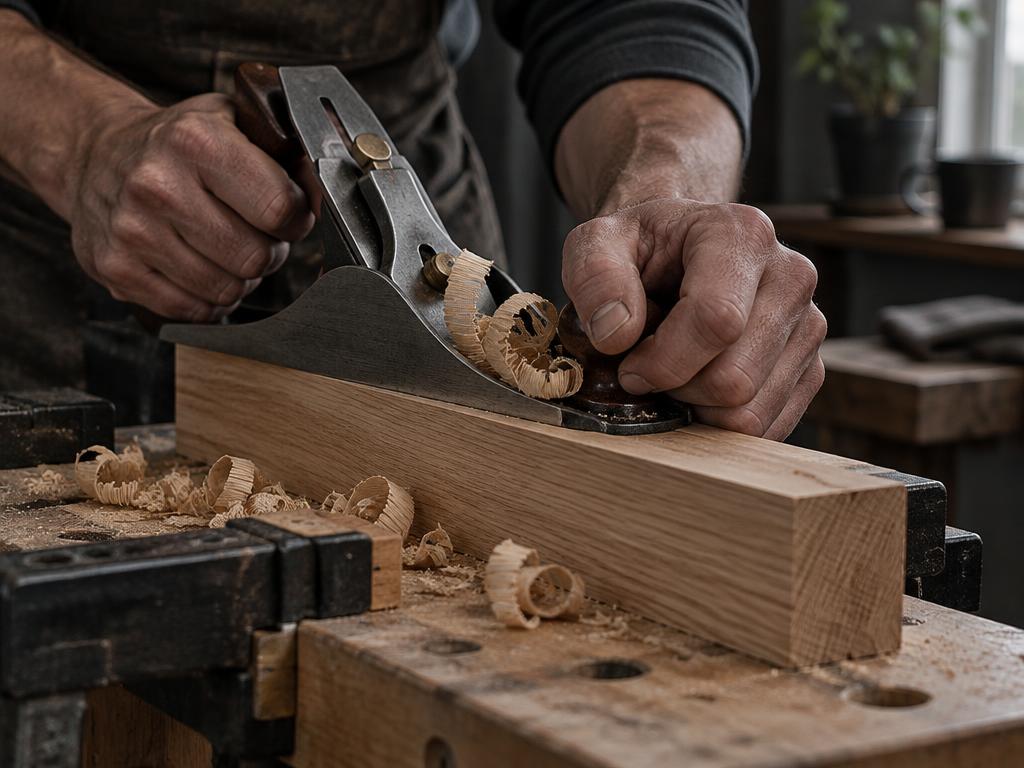
Start with the edge
A dull iron makes every adjustment harder to judge. Sharpen according to the plane maker’s instructions, using a stable sharpening surface and a method you can repeat. Keep fingers clear of the edge and do not use skin as a sharpness test. Check that the back and bevel meet cleanly. The cutting edge is a working part, not a decoration.
Adjust on scrap
Retract the iron before assembling the plane, then advance it gradually on a securely held scrap board. Check that the shaving is even across the width and use the lateral adjustment where available. Follow the maker’s guidance for the cap iron and mouth opening. A light, consistent cut tells you more than a deep pass that stalls halfway down the board.
Check the result
Use a straightedge and square to judge the board, not the size of the shaving pile. Mark high areas lightly with pencil and work them deliberately. If the plane chatters, stop to check sharpness, seating, and workholding. Retract or protect the edge before storage. A few minutes spent setting the tool can save a long session of correcting the surface.