THE LOG / WOODWORK / 2 MIN READ
Read the Grain First
Before sanding harder, look closer. Grain direction explains a lot of what a board asks of the tool.
SMPLMN / Practical notes
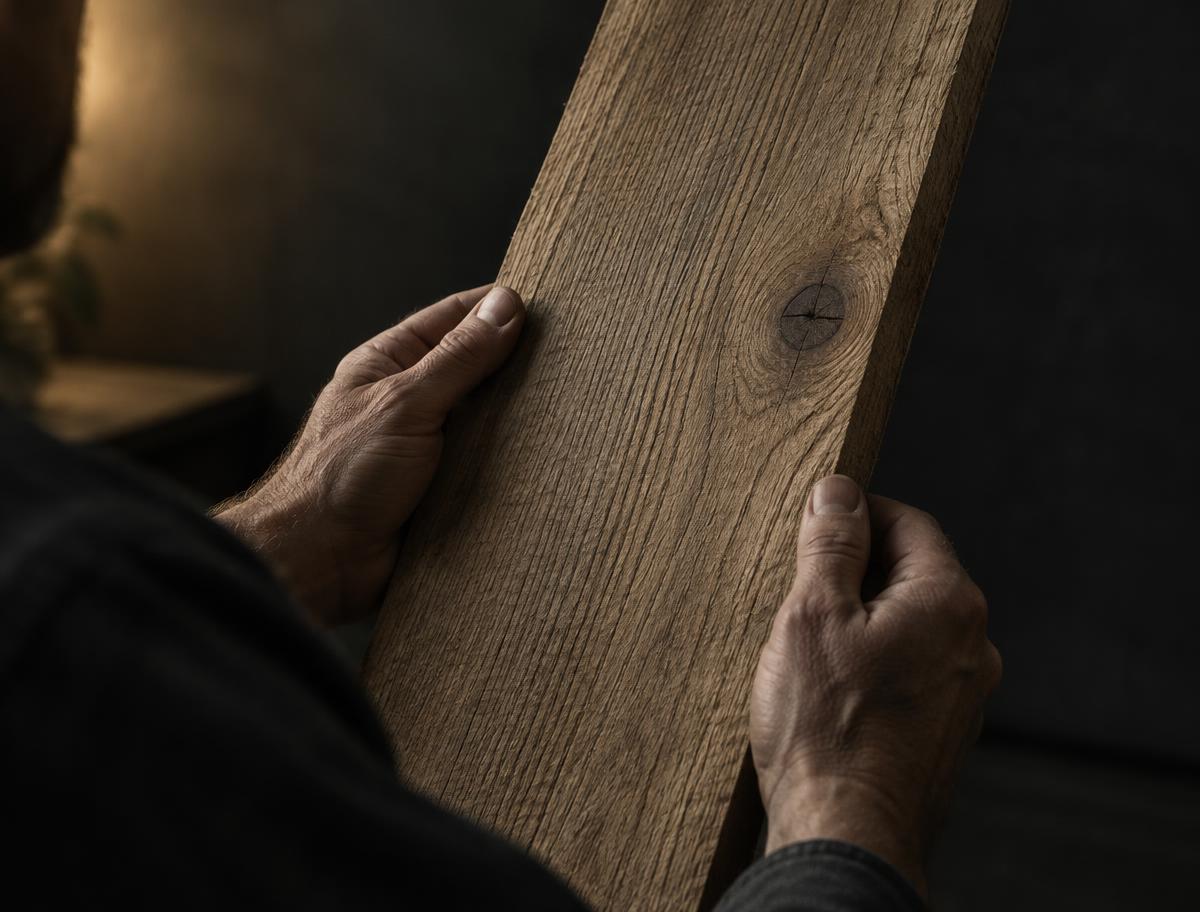
Look along the board
The lines on a board show how its fibers travel, but they do not always tell the whole story. Inspect the face, edge, and end grain together. Knots and reversing grain deserve attention before the first pass. Mark one reference face with pencil so you can keep track of the board when it turns over on the bench.
Try a shallow cut
Secure the board and use a sharp, properly adjusted tool. Begin with a shallow pass on a less visible area. If the fibers lift and tear, stop rather than forcing the next stroke. Try working from the other direction and reduce the depth of cut. Some boards have interlocked grain that needs a different approach. Scrap is a good place to learn the difference.
Leave room for movement
Wood changes width as humidity changes. A wide board fixed rigidly across its grain can split or distort. Choose joinery and fasteners that allow that movement, especially in tabletops and panels. Follow established plans for structural work. A smooth surface is satisfying, but a board that stays sound through the seasons matters more.