THE LOG / METALWORK / 2 MIN READ
Before the First Hole
Accurate drilling starts before the bit turns. Layout and workholding matter more than force.
SMPLMN / Practical notes
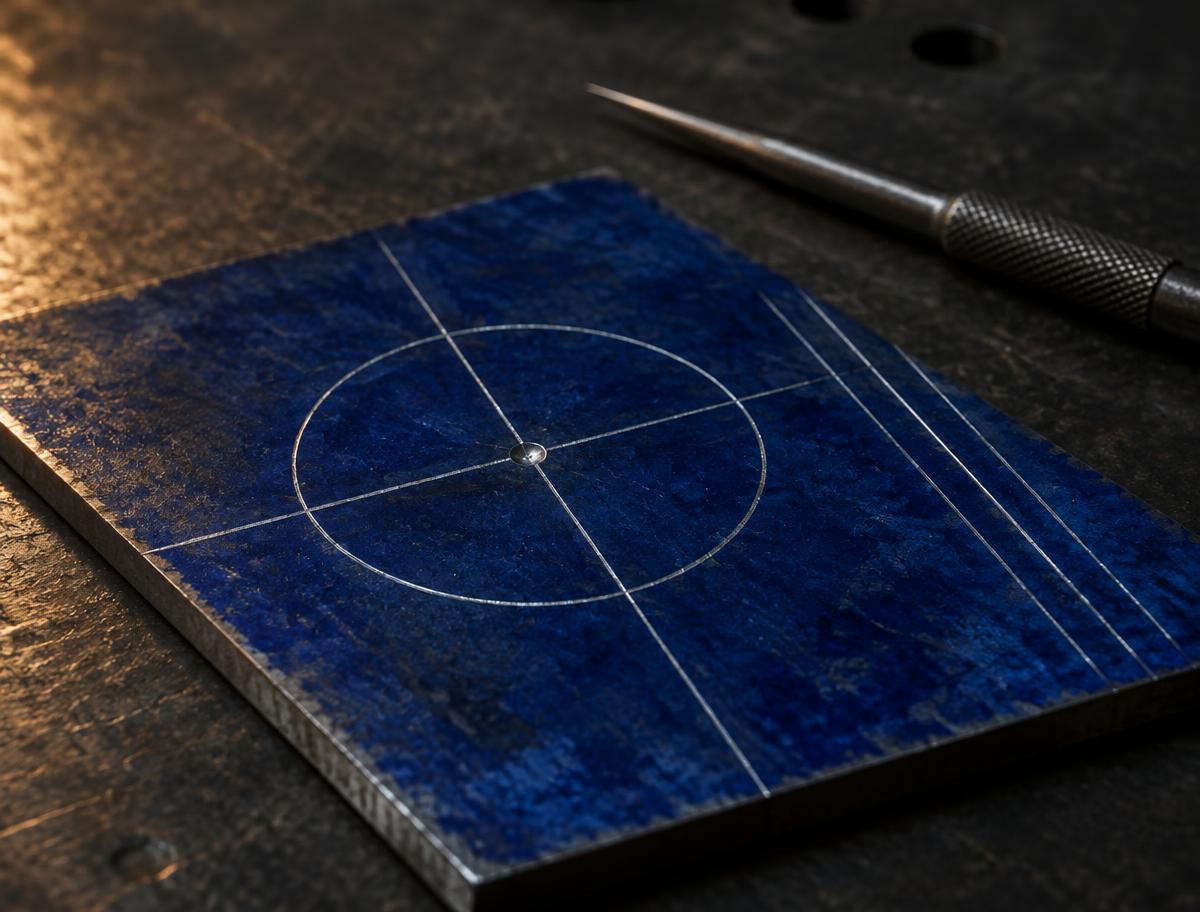
Make the mark count
Work from one reference edge and check the measurement twice. A light center-punch mark can help keep a suitable drill bit from wandering on mild steel. Practise on scrap of the same thickness before committing to the part. Identify the metal first; unfamiliar alloys and coated material need their own tooling and precautions. A mark is a starting point, not a guarantee of accuracy.
Clamp before cutting
Never hold a loose metal part in your hand while drilling. Clamp it securely with suitable backing and follow the drill manufacturer’s instructions. Wear eye protection, secure loose clothing and hair, and keep gloves away from rotating machinery. Choose the bit, speed, and cutting fluid from the tooling guidance for that material. Stop the machine before making adjustments or clearing chips with a brush.
Finish both sides
The exit side often carries a burr even when the entry looks clean. Once the tool has stopped and the part is safe to handle, deburr both faces with an appropriate hand tool. Check the hole against the fastener it will receive. Do not enlarge it blindly to disguise a layout error. Record the setup that worked on your scrap; a repeatable process is more useful than one lucky hole.