THE LOG / METALWORK / 2 MIN READ
Keep Rust Off the Tools
A dry tool lasts longer. Build a maintenance habit that takes less time than restoring neglected steel.
SMPLMN / Practical notes
Inspect before restoring
Surface rust and structural damage are not the same thing. Examine the working edge, handle, and any load-bearing areas first. Deep pits, cracks, or a loose striking head can make a tool unsafe even after it looks clean. Set suspect tools aside. Restoration should never hide damage or turn a decorative object back into working equipment without a sound assessment.
Start gently
For light surface rust, begin with a hand brush or a mild abrasive suited to the finish. Protect your eyes and follow the instructions for any cleaning product. Test a small area before stripping an entire surface. Keep chemicals off wood, leather, and painted markings unless they are compatible. Dry the tool thoroughly when finished; moisture left in a joint undoes the work quickly.
Make storage part of the job
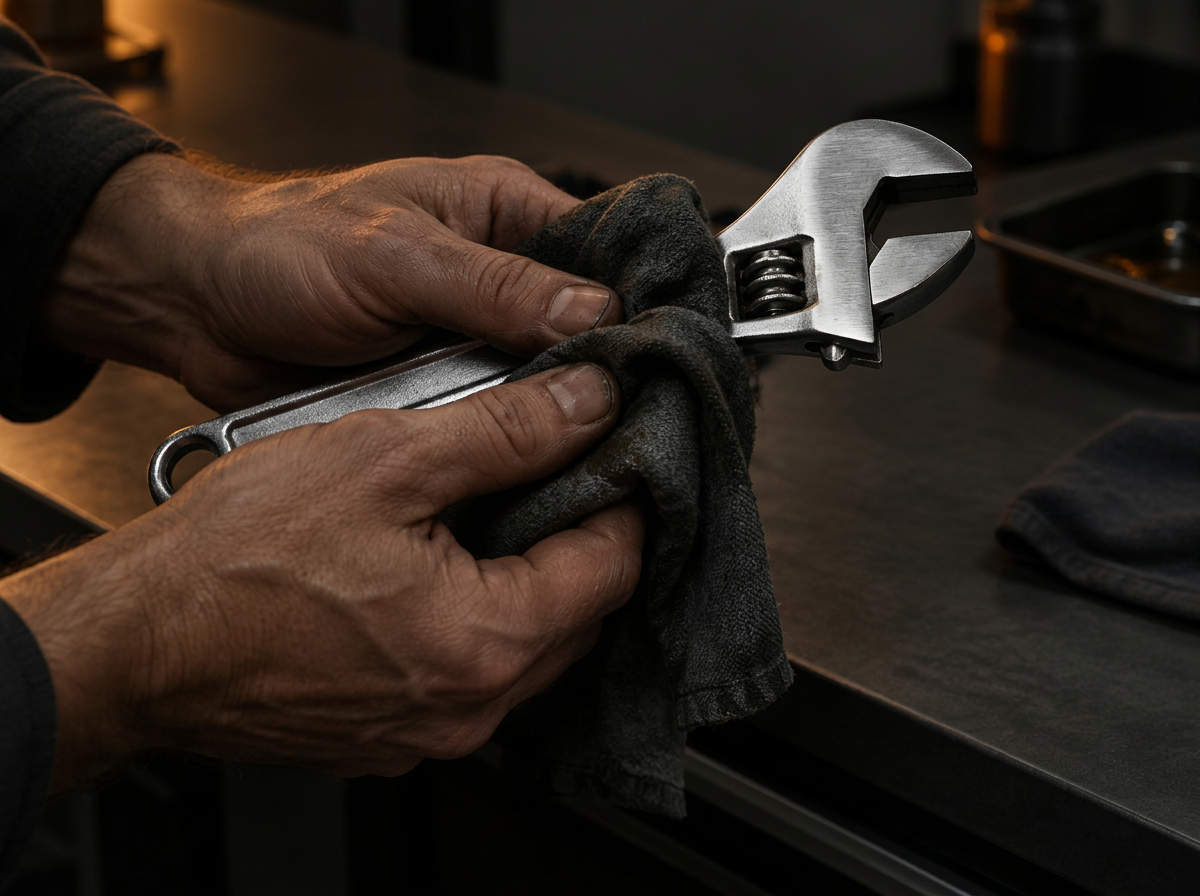
Use a thin compatible protective oil or wax on bare steel, keeping it away from surfaces that must remain oil-free. Wipe tools after use and store them somewhere dry. Check them after damp weather rather than waiting for orange spots. Cloths used with drying oils can self-heat; handle and dispose of them exactly as the product label directs. Small habits keep a usable tool usable.