THE LOG / FOOD & SOIL / 2 MIN READ
Know the Ground by Hand
A handful of soil tells you something useful. It does not tell you everything.
SMPLMN / Practical notes
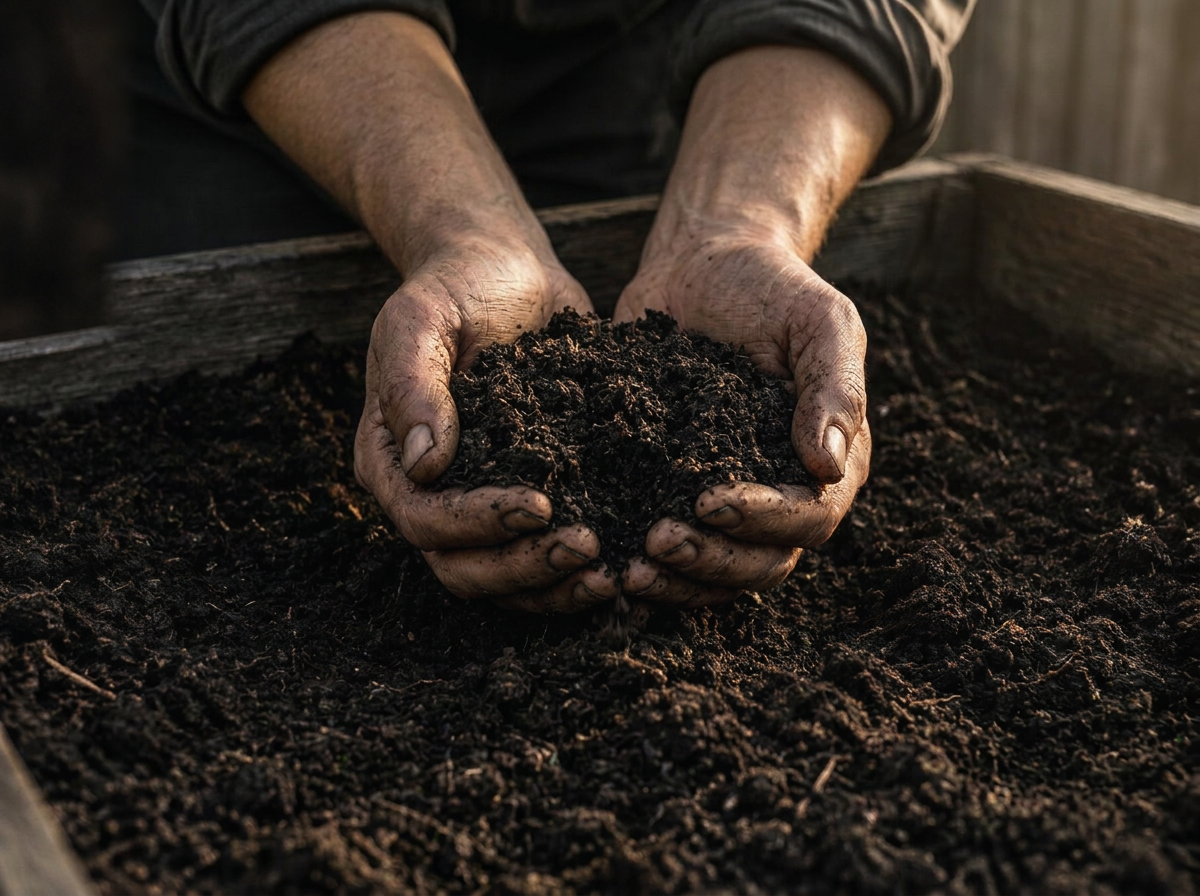
Feel the texture
Take a sample from the growing area rather than the path. Moisten it just enough to work between your fingers. Sand feels gritty, silt feels smoother, and clay feels sticky and can form a ribbon. This rough test helps explain drainage and workability. It does not identify contamination, nutrient levels, or whether the soil is safe for food growing.
Watch after rain
Notice where water collects and how long the bed stays wet. Avoid digging or walking on soil when it is saturated; that can damage its structure. Keep permanent paths so the growing area sees less compaction. If water persists, investigate the site and seek local advice before adding material or altering drainage. A single test cannot describe every layer below the surface.
Change slowly
Use soil-test results and local growing guidance to decide what to add. Suitable finished organic matter can improve structure over time, but dumping sand into clay is not a reliable shortcut. Compare the same area through the season and keep notes. Soil work is usually gradual. The useful result is healthier growth and manageable water, not a particular look in your hand.